+ History +
The Meaning and History of Momento Mori
Memento Mori is one of the oldest, and indeed most enduring ideas of Western thought.
Memento Mori is Latin.
Memento, Remember
Mori, To Die
In English this is often rendered as ‘Remember you must die’, ‘Remember death’ or ‘Remember that you will die.’
Now you would be forgiven for focusing on the macabre and being immediately drawn to the sense of dying or death. Few people like to be reminded of their own mortality or the inevitability of death itself.
However therein lies the beauty and the truly uplifting part in the ideology of Memento Mori.
Remember.
This is not a statement about death but an instruction and a belief that you would do well to live by.
Remember death, whilst you are alive.
This remembrance is not there to be depressing, but to encourage you to live a full and rich life and remind us that life is not guaranteed. It will end and your life would undoubtedly be more well lived by never losing sight of this message and living with more meaning and purpose.
Whilst Memento Mori itself is Latin the ideology is far older than Latin.
Greek philosophers were deeply interested in mortality. Greek Stoics often made point of saying that death is unavoidable, is a part of nature and something we should embrace without fear, but with acceptance.
Roman philosophers and Emperors regularly talked of mortality in their writings, notably Marcus Aurelius and Seneca.
Their principle was often simple, you and everyone you know will eventually die. Time is limited so use it – and use it well.
Memento Mori was transformed and adapted by Christianity.
Early Christians were encouraged to contemplate death because earthly life was temporary, whereas eternal life was ultimately more important.
Through the Middle Ages and Medieval Europe the idea became deeply embedded in European culture as death was a regular part of life. It was seen and felt regularly and was in no way hidden like it is in modern society today.
During the Renaissance death became something of an artistic obsession.
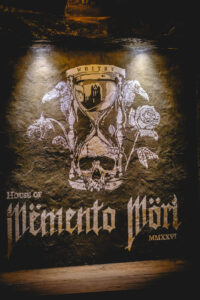
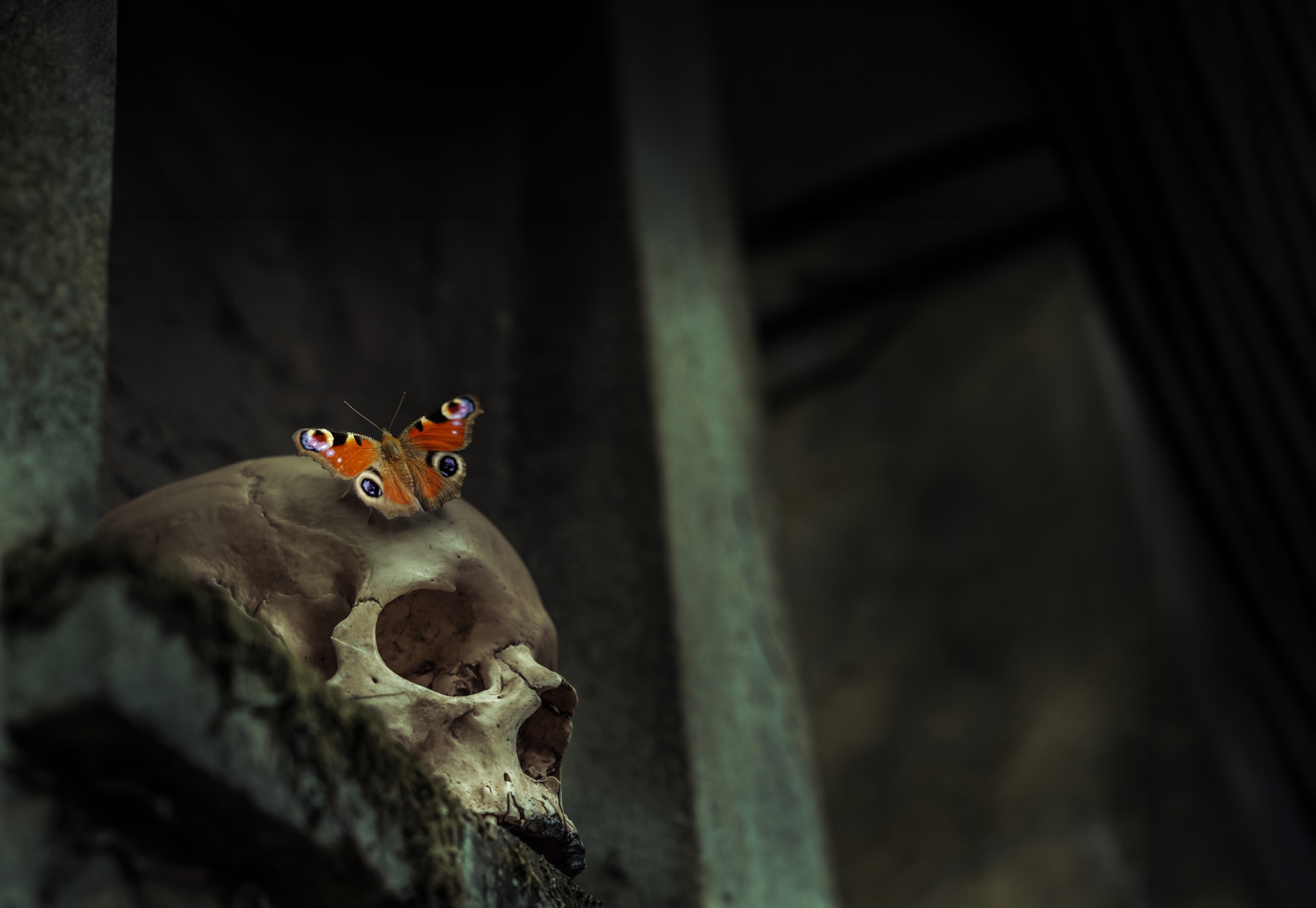
Vanitas from Latin means emptiness, futility or transience. Vanitas paintings typically contained images of skulls, coins, dying flowers, an hourglass and of course skulls.
And so it is easy to interpret Memento Mori as something of a morbid obsession. However this is not right.
The philosophy of Memento Mori is life affirming.
Your time is limited.
Your time is valuable.
Death gives life urgency.
So make your time count.
House of Memento Mori Whitby, England
Opened in September 2026, House of Mëmento Möri is not a macabre or depressing homage to death. But we like to think (and sure hope!) is a wonderful place to spend some time whilst alive. Hopefully, giving you some insight into the philosophy of Memento Mori and a place for you to spend some of your valuable time.
We have a humble and simple approach, but one we feel is unbeatable – a cosy, friendly as they come venue. Serving up the finest craft ales, beers, real ciders, artisan spirits, wines, hot drinks and snacks that you will find anywhere in Whitby or indeed the North of England.
All whilst serenaded to nothing but the honey for the soul that is classic Rock and Metal music. We wouldn’t do it any other way…
6 Grape Lane, Whitby, England
Before we made this place our home 6 Grape Lane was empty and in need of a new lease of life … and an awful lot of love and care. Before us it was a woodworkers shop and was the longest serving business on the lane. It operated for some 60 or 70 years.
The building is a beautiful, Georgian, and Grade II listed.
From the early 19th century it operated as an ironmongers. It then spent a brief spell as a furniture dealers shop until becoming a woodworkers shop.
6 Grape Lane stands proud on one of the oldest lanes in Whitby with a wealth of history in and of itself.